The Laidlaw Disability Group guides Laidlaw College’s approach to disability belonging, inclusion, and theology. Explore our framework, values, and commitment to inclusive Christian education.
About Us
Disability & Belonging
Have a question about admissions, courses, fees, or campus life? We’re here to help. Fill in the form below and a member of our team will get back to you as soon as possible. Whether you’re a prospective student or a current enrollee, we welcome all enquiries and look forward to supporting your educational journey.
To begin your application process to study at Laidlaw simply create an account in our student portal and begin your application.
At Laidlaw College, our approach to disability support and inclusion is grounded in a theological vision developed through the work of the Laidlaw Disability Working Group and articulated in the Laidlaw Disability Working Group Theological Framework (May 2012).
In service of Laidlaw’s vision of a world shaped by love, compelled and informed by the Gospel, we believe that engaging the experience of disability is an essential part of our mission to equip students and scholars to renew their communities with a faith that is both intelligent and courageous.
Disability is not a marginal issue. With approximately one in five people experiencing some form of disability during their lives, disability is part of the human experience and touches individuals, families, churches, and communities across the world. As a Christian learning community, we believe it is vital to listen to, learn from, and walk alongside people with disabilities and ongoing health challenges
Our understanding of disability begins with the conviction that a person’s primary identity is not their disability but their humanity.
Every person, with or without disability, is created in the image of the Triune God and possesses inherent dignity, worth, and value. Human beings are not defined by productivity, rationality, independence, or physical ability. Rather, we are relational beings created by God for relationship with God, one another, and creation.
The Bible presents human beings as an integrated unity of body, soul, and spirit. Because Scripture does not separate the physical from the spiritual, we recognise that challenges affecting the body deserve the same care and attention as those affecting emotional, psychological, or spiritual wellbeing.
The biblical story from Genesis to Revelation reveals that humans are created for loving relationship. While sin has distorted these relationships, it has not erased our humanity or our capacity to receive and give love.
Because God is love, love—not intellect, ability, or independence—is the defining characteristic of what it means to be fully human.
We express our humanity through the giving and receiving of love. This remains true regardless of disability, impairment, health condition, or stage of life.
At Laidlaw, we believe that every person contributes to the community through their unique gifts, experiences, relationships, and participation.
We are committed to being schooled in a Gospel that meets people in their suffering and offers the hope of transformation.
While all people experience brokenness and suffering, we recognise that disabled people often face additional barriers created by society, environments, attitudes, and systems that limit participation and belonging.
This understanding calls us not only to support individuals but also to examine and remove the barriers that prevent full access to learning, community, worship, leadership, and service.
Our theological framework identifies several foundations for solidarity with disabled people.
First, despite our differences, every person is part of God’s good creation.
Second, all people experience brokenness in different ways. Whether visible or invisible, physical, emotional, intellectual, relational, or spiritual, human brokenness is a shared reality. This means we stand alongside one another as equals before God—not as those who help and those who are helped, but as fellow recipients of God’s grace.
Most importantly, our solidarity is rooted in Jesus Christ.
In the incarnation, God entered fully into the human condition through Jesus Christ. Christ embraced humanity in all its diversity, suffering, and vulnerability. Through his life, death, and resurrection, all people are invited into restored relationship with God.
Whether we identify as disabled or not, we are equally embraced by Christ and equally called to participate in the life of God’s kingdom.
We believe God continues to work healing and transformation in people’s lives through the Holy Spirit.
At the same time, we recognise that the fullness of restoration promised in Christ has not yet been completely realised. As Christians, we live in the tension of the “now and not yet”—experiencing glimpses of God’s restoration today while anticipating its complete fulfilment when Christ returns.
This perspective encourages us to pray for healing, pursue justice, remove barriers, and support one another while holding onto the hope of God’s ultimate restoration of all things.
Our theology of inclusion shapes our educational practice.
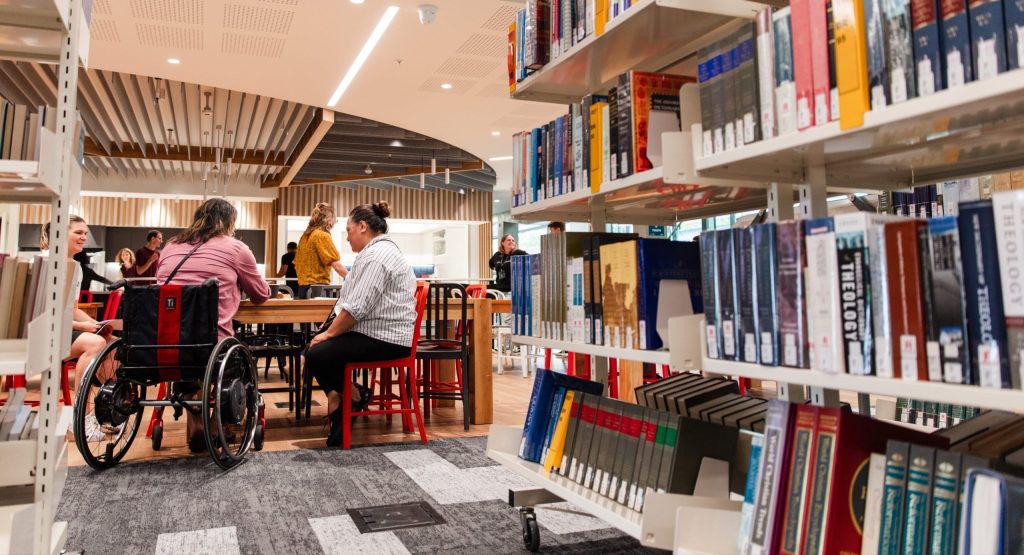
Laidlaw embraces the principles of Universal Design for Learning (UDL), seeking to create learning environments that are accessible and supportive for the widest possible range of learners from the outset.
Through UDL, we seek to:
This approach reflects our commitment to recognising the diversity of human experience and enabling every student to participate meaningfully in their educational journey.
Laidlaw’s commitment to accessibility and equitable participation is also informed by Kia Ōrite, Aotearoa New Zealand’s code of practice for achieving an inclusive and equitable tertiary learning environment for disabled learners. Kia Ōrite provides nationally recognised guidance for tertiary institutions seeking to remove barriers and improve outcomes for disabled learners. [tec.govt.nz], [achieve.org.nz]
The principles of Kia Ōrite encourage institutions to embed accessibility, inclusive teaching practices, learner support, organisational responsibility, and continuous improvement throughout the entire learner journey. [tec.govt.nz], [tec.govt.nz]
These principles align strongly with Laidlaw’s theological commitment to dignity, participation, equity, and community for all learners.
We believe that all people, with or without disability, are equal members of the Kingdom of God.
This conviction calls Laidlaw College to actively include people with disabilities across every aspect of college life—including learning, leadership, employment, worship, community engagement, and decision-making.
It also encourages all members of our community to contribute to an inclusive culture where everyone is welcomed, valued, respected, and empowered to participate.
Our vision of inclusion extends beyond disability support services alone.
We seek to ensure that our:
reflect our commitment to accessibility, belonging, and participation for all.
The Laidlaw Disability Advisory Group continues to advise the College on theology, disability, accessibility, and inclusive educational practice. The group's vision is to see Laidlaw become a community where inclusive practices are embedded across pedagogy, curriculum, policy, student support, and community life. As we continue this journey, we strive to faithfully embody the Gospel by recognising the dignity of every person, removing barriers to participation, and cultivating a learning community where all people can learn, contribute, belong, and flourish.