Our Heritage
Timeline
Have a question about admissions, courses, fees, or campus life? We’re here to help. Fill in the form below and a member of our team will get back to you as soon as possible. Whether you’re a prospective student or a current enrollee, we welcome all enquiries and look forward to supporting your educational journey.
To begin your application process to study at Laidlaw simply create an account in our student portal and begin your application.
The vision was to equip men and women to renew Aotearoa and the world in light of the gospel.
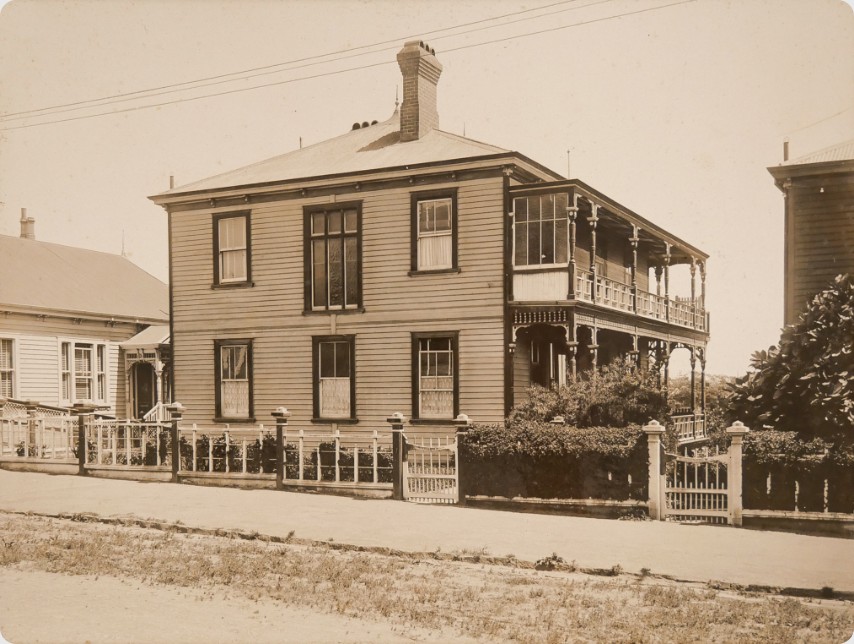
1920s Hopetoun Street Building
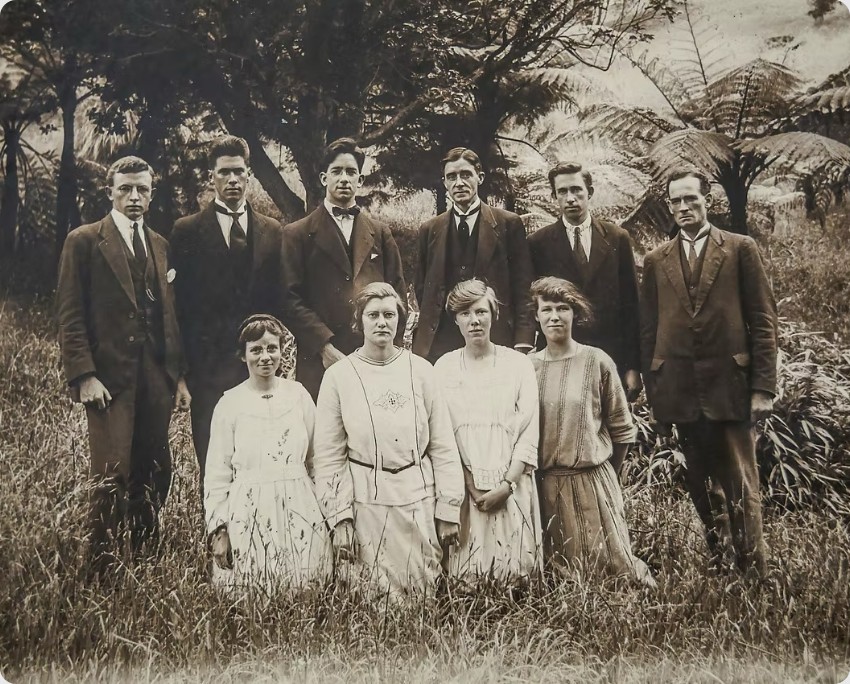
On 1 March 1922 classes begin with 5 men and 5 women in a large house in Ponsonby. Most of the early teaching in the two-year programme is shouldered by Principal Rev. Joseph Kemp and Superintendent, Dr Charles J. Rolls.
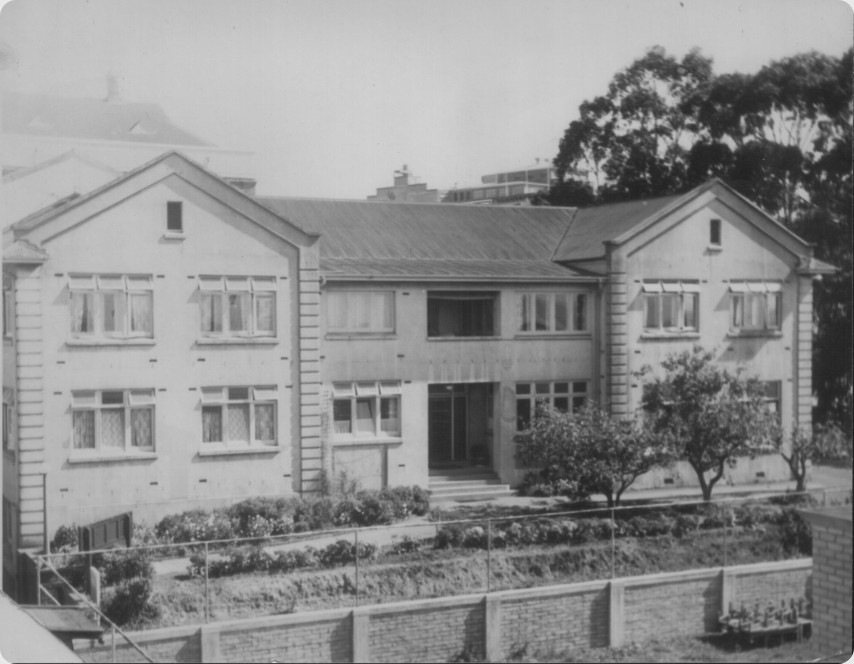
A quickly growing student roll leads to the construction of a two-storey building in Queen Street adjacent to the Baptist Tabernacle, opening in August 1927.
1930s Queen Street Campus
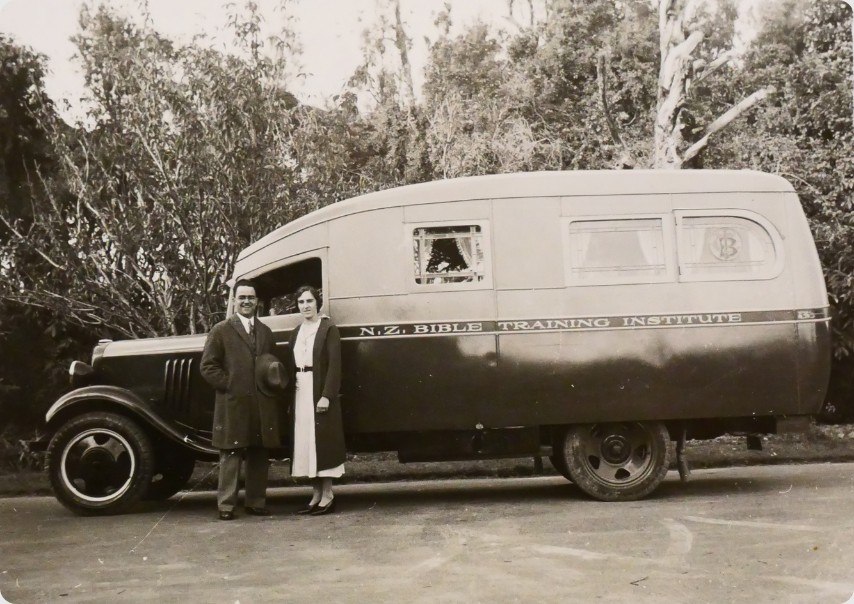
The evangelistic commitment of NZBTI sees the establishment of the Kemp Memorial caravan, the formation of the United Māori Mission, and a fruitful decade of campaigns by the Institute’s evangelist, Andrew Johnson.
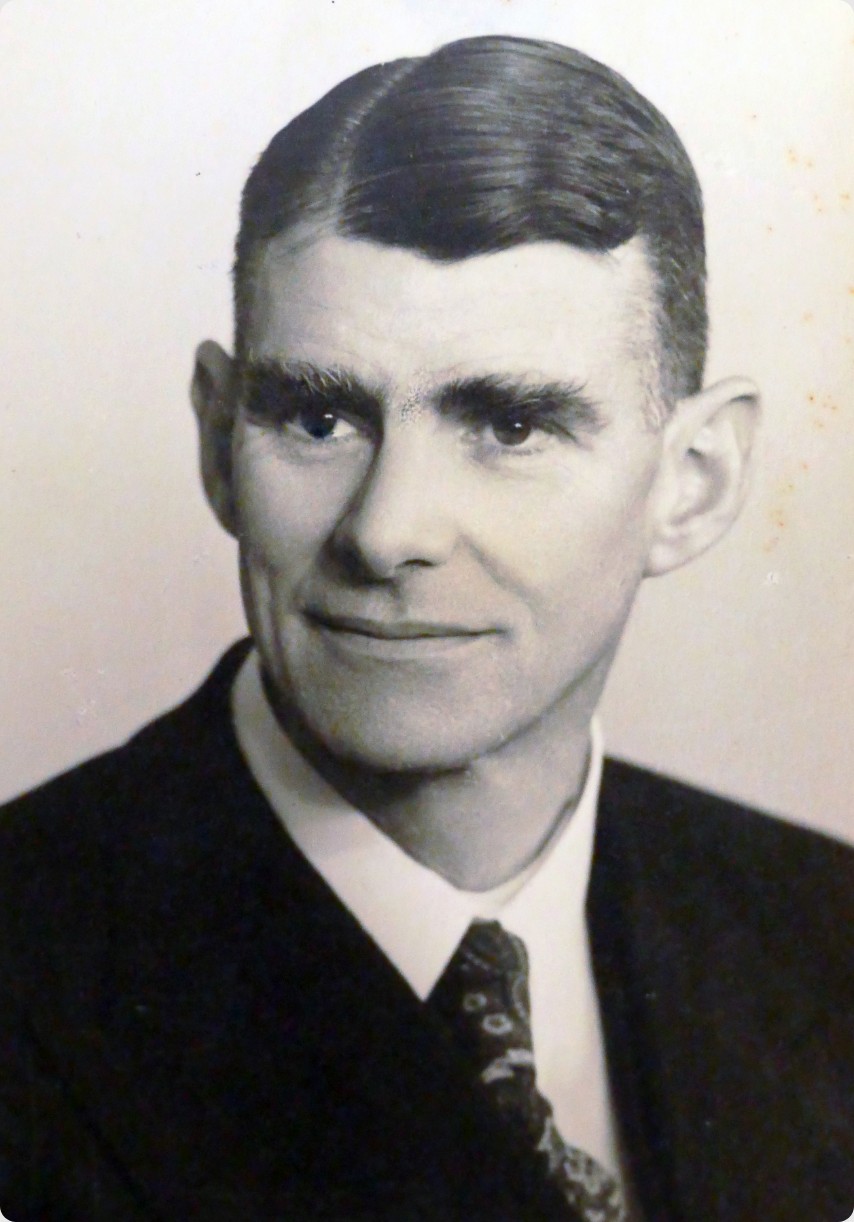
John Deane
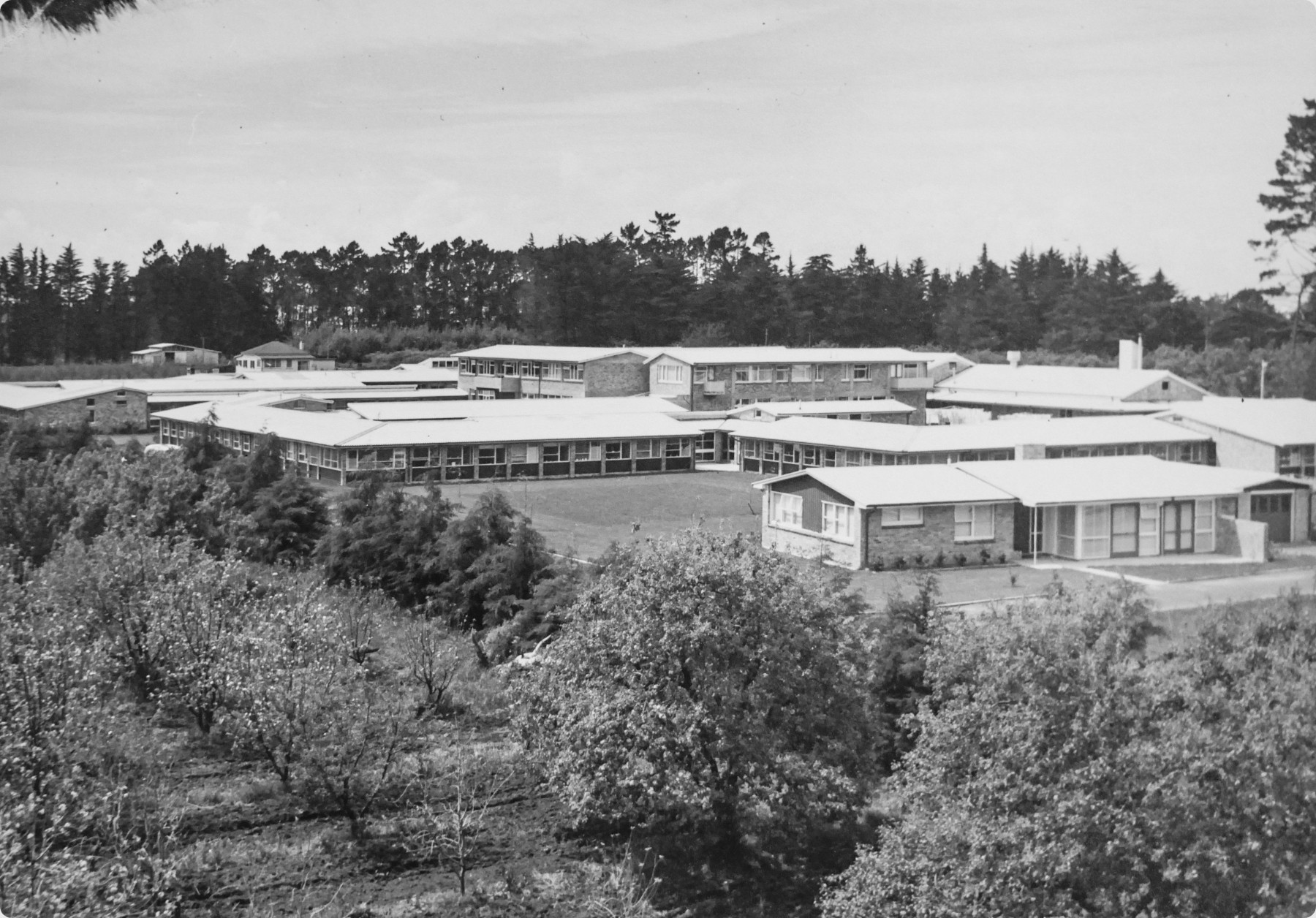
Student applications steadily increase, and two new dormitory wings are added in 1953 and 1956. However, accommodation remains tight and in 1957 the search begins for land that can accommodate growth. An orchard site in Lincoln Road, Henderson is purchased. Construction is well underway when John Deane, his daughter and grandson, are tragically killed in a car accident on 21 December 1959. Rev. John Pritchard steps in as Interim Principal.
In 1921 a group of Christian businessmen spend weeks in prayer with Baptist pastor Rev. Joseph W. Kemp and discern it timely to establish the New Zealand Bible Training Institute (NZBTI). Its purpose is to equip Christians as effective evangelistic and missionary workers.
1923 Graduating Class
The 1930s mark a change in leadership with the death of Rev. Kemp in 1933. Former student, Mr J. Oswald Sanders takes on administrative responsibilities as Superintendent, and the Dean, Henry Yolland, leads the teaching programme. A few days after Kemp’s funeral, the 100th NZBTI graduate departs for overseas mission service.
Kemp Memorial Caravan
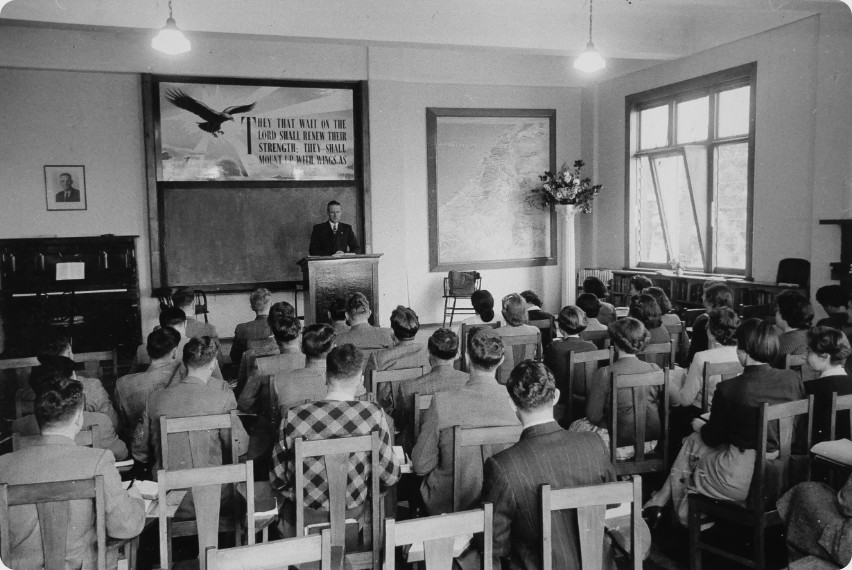
Student numbers diminish rapidly during the years of World War II. By 1943 only two men are enrolled alongside 16 women. In all, 108 students serve in the Armed Forces. The mid-1940s sees another change in leadership with founding Board member Robert Laidlaw becoming President and Chair of the Board, and Rev. John Deane appointed Principal. As an ordained minister, with both Arts and Theology degrees, Deane brings a new level of denominational and academic acceptability to the Institute.
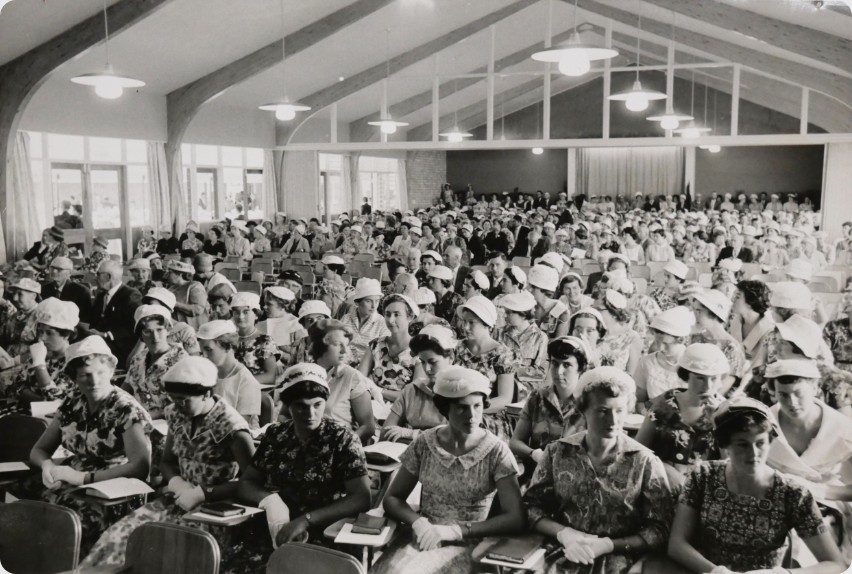
1950s Queen Street Class
1960s Henderson Campus
The new campus opens in 1961 to great public interest, with over 6,000 attending the opening. Rev. Allan Burrow commences as Principal a few months later and brings rapid change. The curriculum is realigned to make external academic recognition possible, with students able to take the Melbourne College of Divinity’s Diploma and BD subjects alongside the NZBTI Diploma. A greater diversity of subjects is introduced.
Enrolments continue to grow, with 176 students by 1963. More classrooms and a library are built.
In 1965 Rev. David Stewart is appointed Principal. The changing demographic of students is recognised with the construction of the first four family flats on campus in 1968.
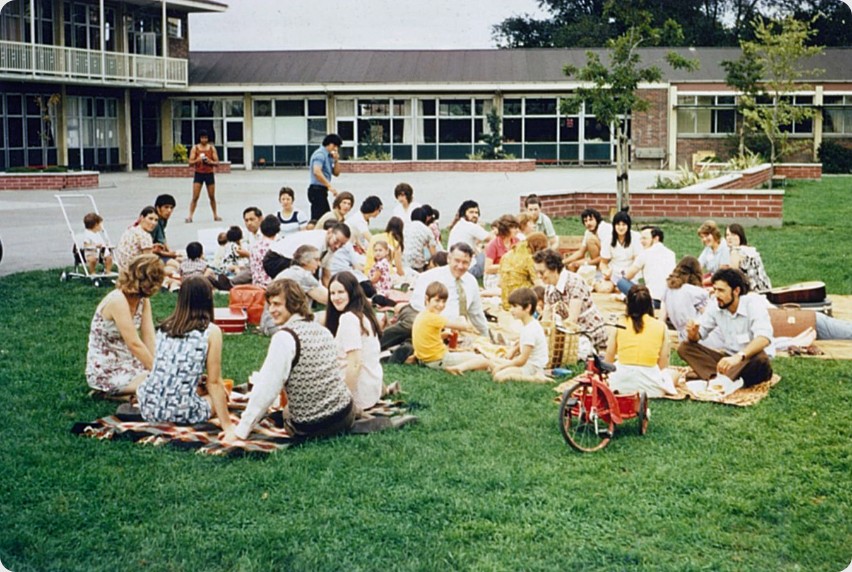
1970s Students and families at Middleton Grange
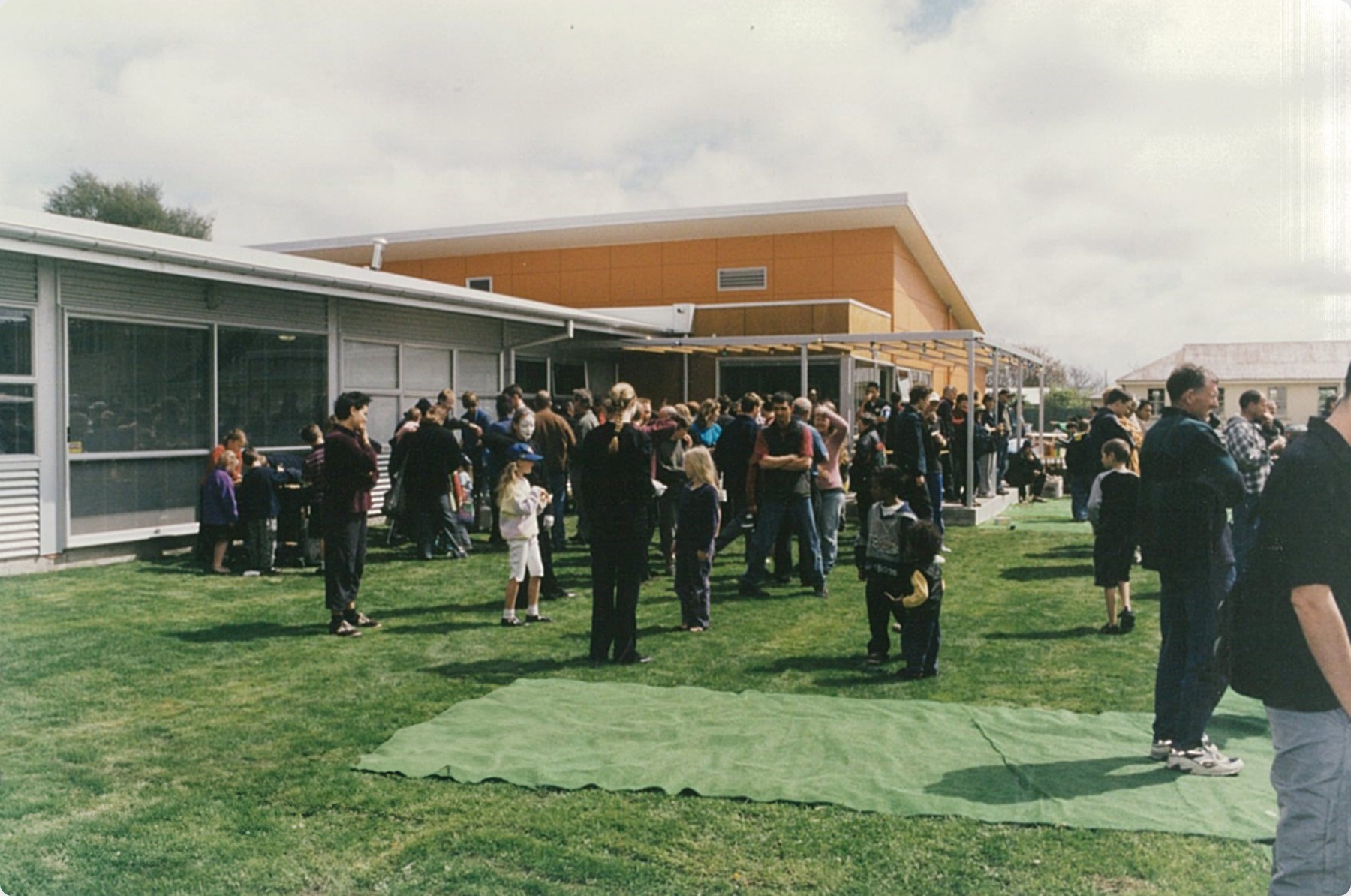
Opening Ceremony
The 1970s see expanding facilities and faculty to accommodate growth in students and a diversity of courses. The Institute’s name is changed to the Bible College of New Zealand in 1972.
A branch college is established in Christchurch in 1975 at the request of Canterbury pastors and educators. Lectures are held in classrooms at Middleton Grange. Two years later, a second branch opens in Dunedin.
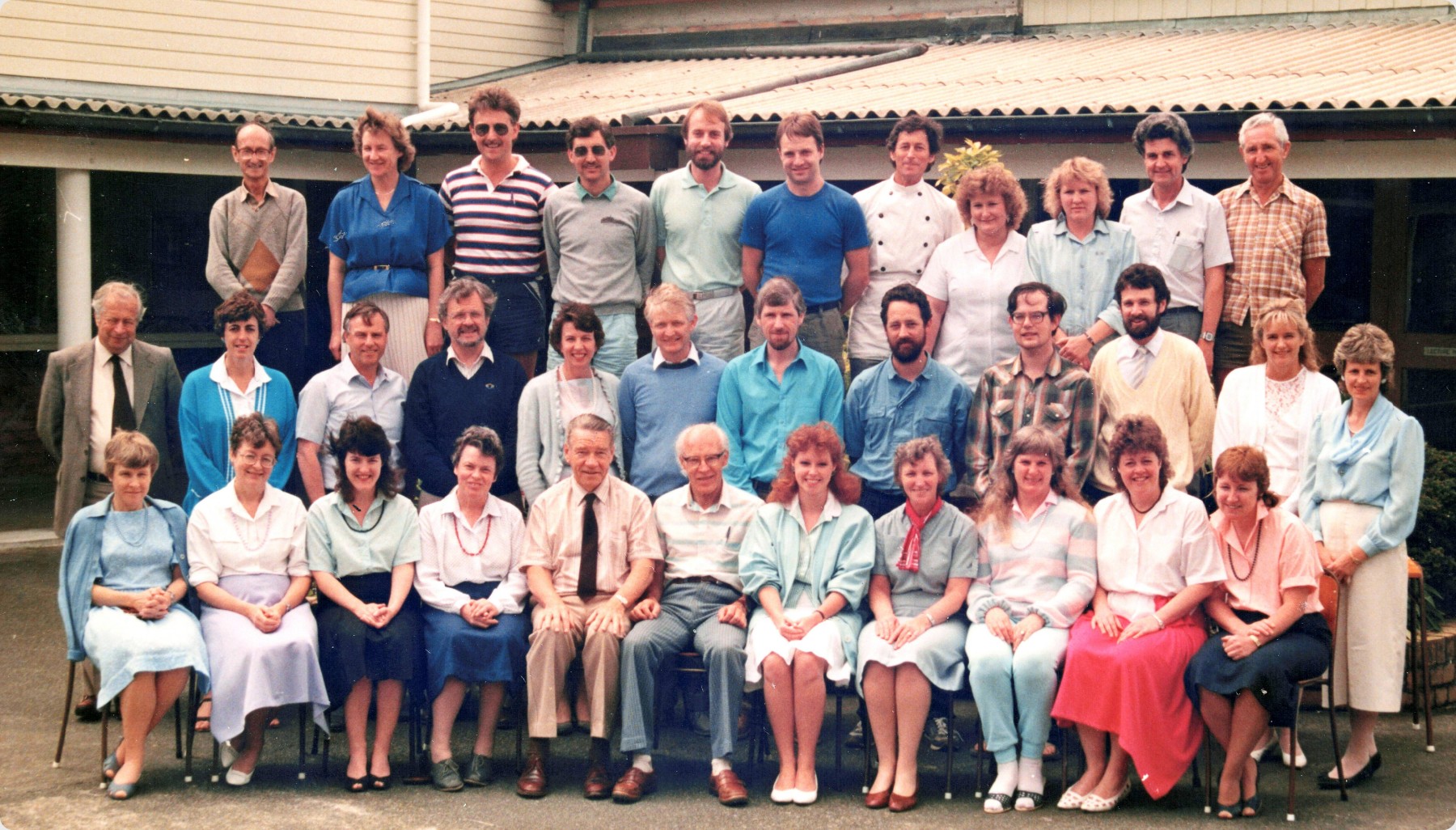
Faculty & Staff Photo c1986
Branch colleges in Nelson and Manawatu open in 1980, and an Extension Studies Department is established. A new level of church-College partnership is reflected in the launch of the Ministry Internship programme in Christchurch in 1983, spreading to other branches throughout the decade.
After 24 years of service, David Stewart stands down at the end of 1988. Vice-Principal Rev. Ian Kemp becomes interim Principal.
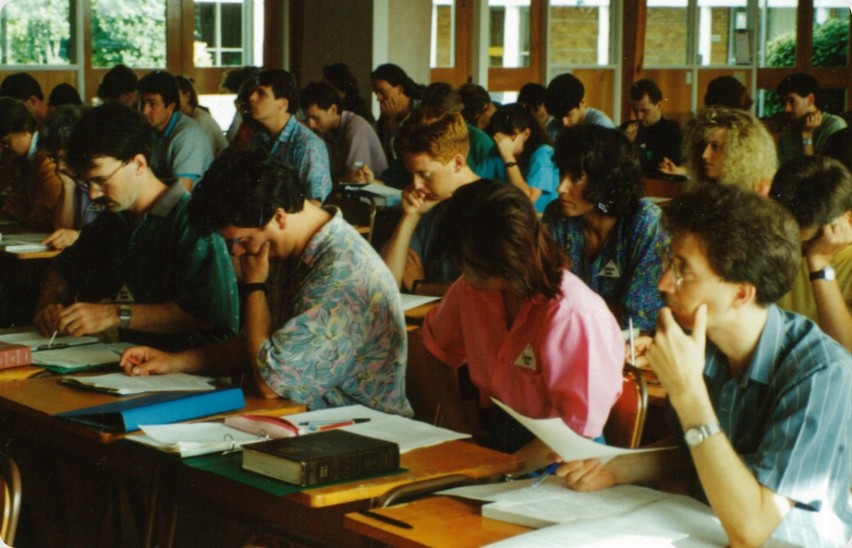
1994 Lecture, Residential College
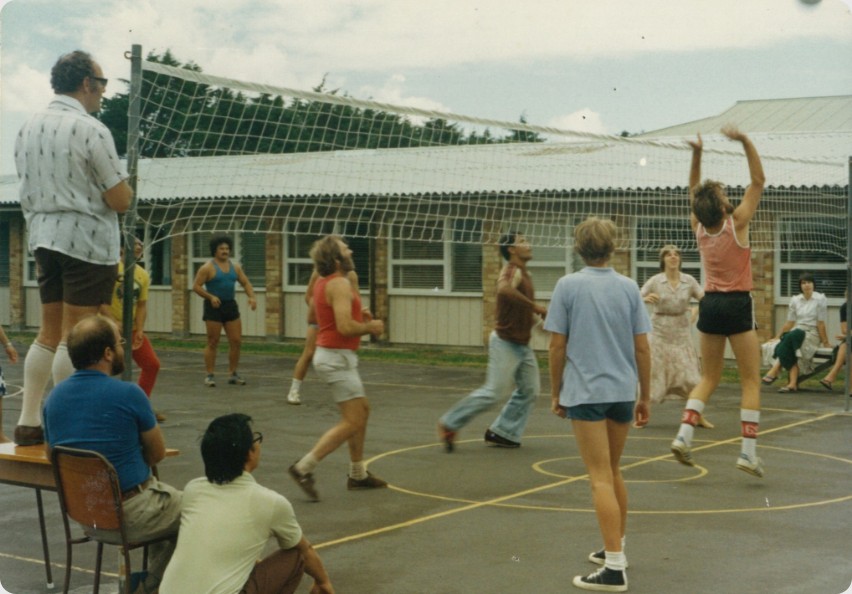
Volleyball at Lincoln Road
The appointment of former student Dr John Hitchen as National Principal in 1990 heralds a period of significant development. The College is the first Private Training Establishment to register with the new NZ Qualifications Authority, allowing the offering of BCNZ degrees and access to student loans and allowances. A Māori Runanga is established, a Missions Studies Department forms, five more branch colleges open, and the Manawatu branch begins offering Certificate and Diploma courses in Christian Counselling. By 1997 BCNZ is offering programmes from Certificate to Master’s level.
In 1998 Dr John Hitchen steps down as National Principal and prominent NZ church leader Brian Hathaway is appointed to the role.
Opening of the new Christchurch Campus
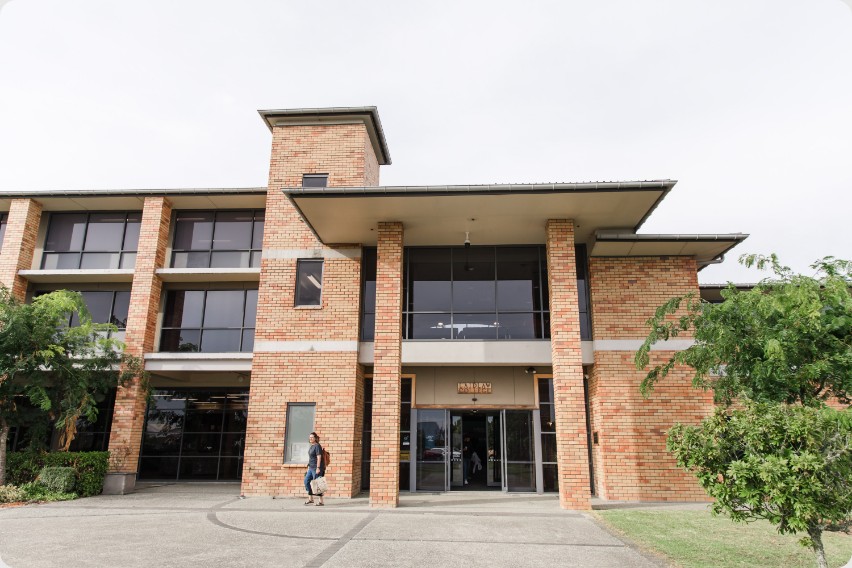
The 2000s are years of transition for the College. A purpose-built campus in Christchurch opens in 2001. Dean of Studies, Hudson Deane, steps in as Principal in 2003 on the sudden death of Brian Hathaway. The J.O. Sanders Centre – a new library and administration building – opens on the Henderson campus.
In 2005 Dr Mark Strom is appointed National Principal with a mandate to clarify the College’s vision and purpose. This leads to the simplification and strengthening of programmes, the closure of regional campuses, and the development of degree-level qualifications in Education and Counselling.
In August 2008, to reflect the broader scope of programmes offered, the College changes its name to Laidlaw College in honour of Robert Laidlaw. In 2009 Dr Strom concludes his tenure as Principal.

New Library and Administration Building, Henderson
Rev. Dr Rod Thompson is appointed National Principal in September 2010 and leads the College into its next phase of strengthening and growth.
A major earthquake on 22 February 2011 in Christchurch finds Christchurch faculty heavily involved in helping churches face the challenge of leading post-earthquake. The Christchurch campus continues to operate during 10,000 aftershocks.
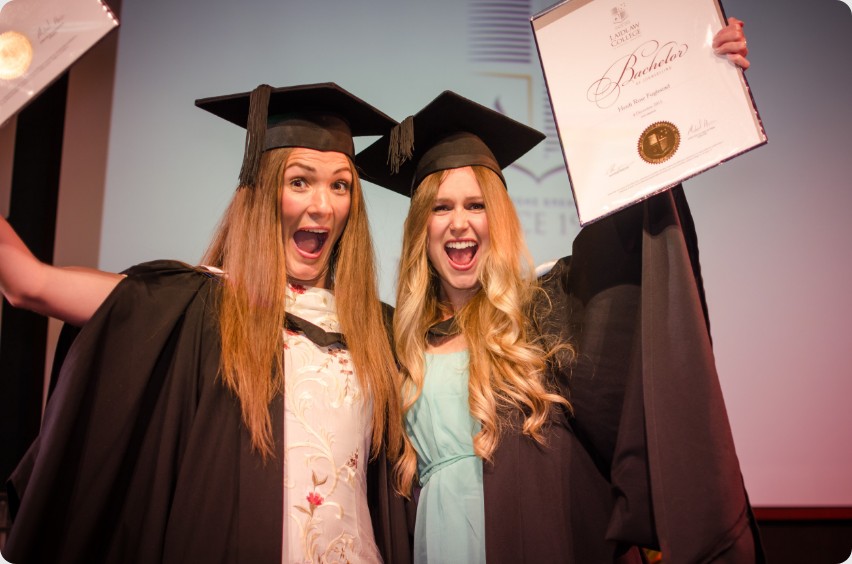
2015 Christchurch Graduation
Dr Thompson’s return to Australia in 2015 leads to a co-chairing of leadership by Dr Stephen Garner and Nigel Smith in 2016. In February 2017 Dr Roshan Allpress commences as National Principal. In late 2019, the College receives approval from the Teachers’ Council and NZQA to offer the Bachelor of Education (Primary) and a Graduate Diploma in Education (Secondary) in both Auckland and Christchurch. That same year the Laidlaw College Foundation purchases a site from the Auckland Council for a new campus in central Henderson.
The Bachelor of Counselling degree commences in Christchurch in 2012 and a small Manukau campus is established in 2014. Decreasing demand for residential living leads to the closure of the Henderson Halls of Residence in 2014. A new partnership with Equippers College to deliver the College’s internship programme begins in 2015.
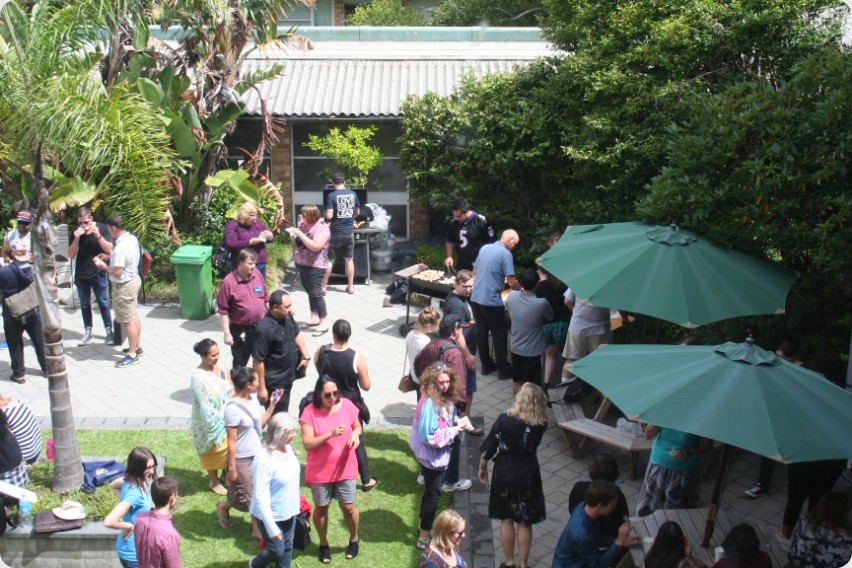
Orientation Week Community Lunch, Henderson, 2016
The College pivots to online teaching and learning with the arrival of the COVID-19 pandemic and a nationwide lockdown in March 2020. Alert level changes continue throughout 2020 and 2021.
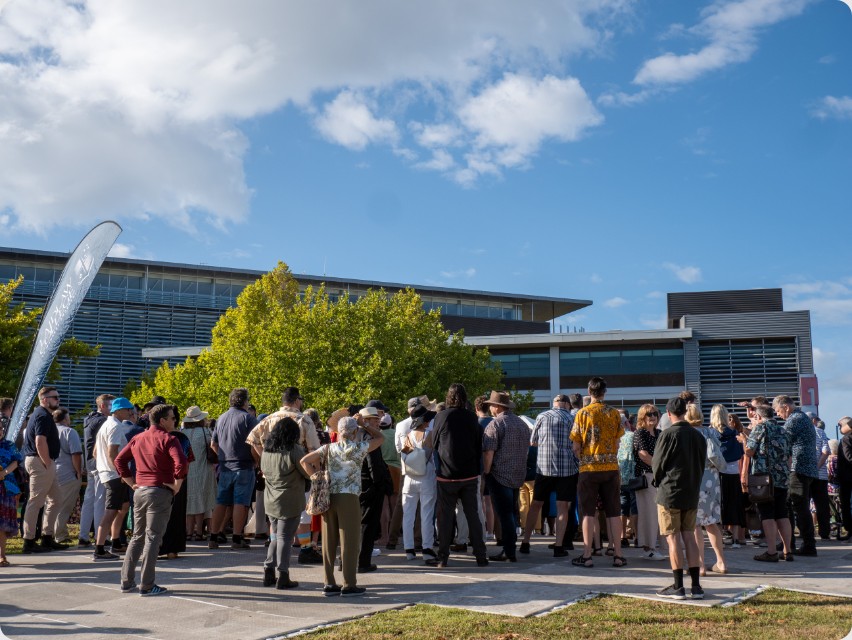
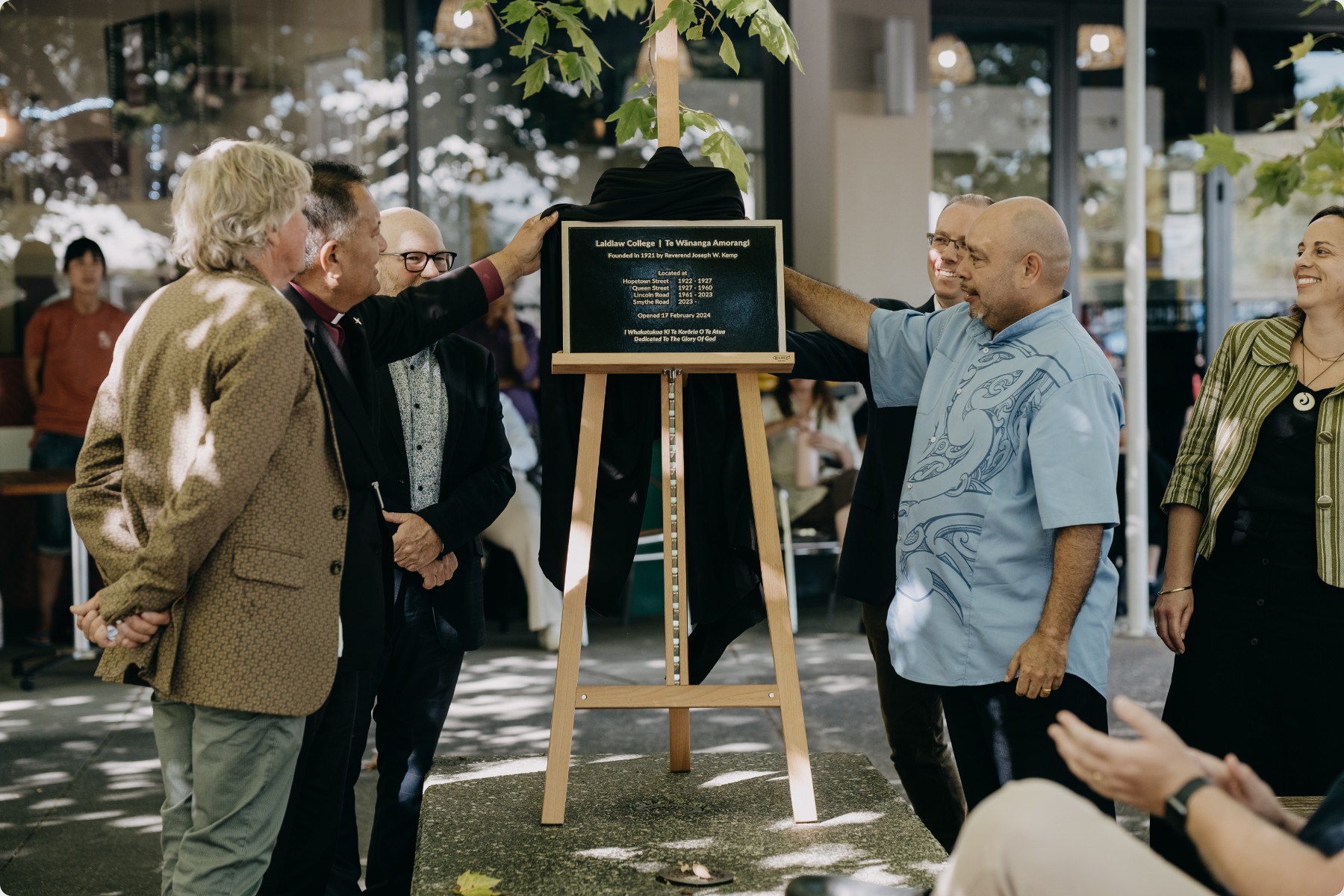
In 2022 the College enters its Centenary season with stories gathered and told of alumni and College life and history. A reunion and public service of celebration is held in April 2023. Later that year the College moves to its new Henderson campus. An official public opening is held in February 2024. Partner college, Te Wānanga Ihorangi, begins classes on campus, moving to their own space on the ground floor in semester two.
In 2025 the College celebrates its Jubilee year in Christchurch. NZQA approve the offering of a Bachelor of Arts degree.
New Henderson Campus Opening Ceremony