Our Heritage
Alumni Stories
To begin your application process to study at Laidlaw simply create an account in our student portal and begin your application.
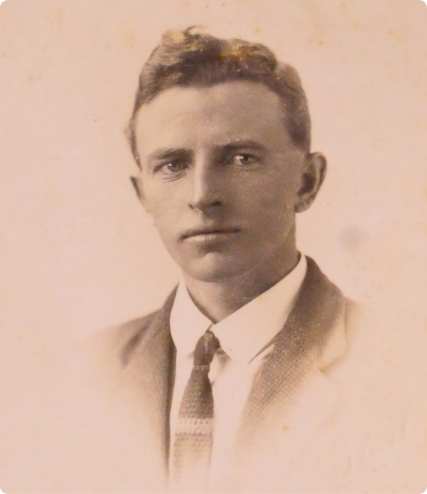
NZBTI Diploma / 1922-1923
4
Rod Gillanders was the first applicant to the NZ Bible Training Institute, now Laidlaw College. Classes started on 1 March 1922 in a ten-roomed house in Hopetoun Street, Ponsonby. Rod, and four other men, lived in and five women attended the daily classes.
In 1925, Rod left NZ to serve with the British and Foreign Bible Society as a Bible colporteur in Brazil. His colportage work involved travelling thousands of miles by horse, mule, boat, and car to distribute and sell Bibles. One 5,000-mile journey took eight months as Rod and an American colleague travelled through the heart of central Brazil. At one point the pair were imprisoned in the north of Brazil for selling Bibles but were released when the State Governor intervened. In the “Graduates’ News” section of the Institute’s Reaper magazine in 1930, Rod wrote: “I have come to love this land and its people. With all its special difficulties, it is a wonderful field of opportunity”.
In the Reaper in 1934, Rod wrote of a three-month journey covering 3,000 miles in which he sold and distributed 600 Bibles and Testaments, and over 3,000 Gospels. In a town where the Scriptures were well received, some years previously missionaries had been hounded out. In another town, pictures of the Pilgrim’s Progress story were projected on the white wall of the Catholic church with the whole town listening attentively – including a priest who years before had a visiting preacher arrested and deported.
In 1935 Rod’s fiancée, Isobel Cuming, made the long journey alone to Brazil, via London, for some months of language study, before marrying Rod on 8 November that year. Their honeymoon involved driving to their new mission base, the city of Feira de Santana in east Brazil. The trip was not without excitement – at one point the couple slept out in the open after their car got stuck in a hole, in the knowledge that a notorious bandit was somewhere in the vicinity!
In Feira de Santana, Rod divided his time between selling Bibles in neighbouring towns and establishing a church. The Gillanders initially held meetings in their lounge with fellow workers – with curious neighbours drawn to the windows by their hymn singing. The local priest, incensed that Protestant missionaries had arrived, actively worked to oppose them – including organising students to yell and scream outside the house during meetings. Despite this, the church gradually grew in number and the first baptisms were held in a nearby stream. The arrival of baby Donald also served to break down the hostility of local women, curious to see the baby. Services were moved to a larger house, then to a corner shop, and finally to their newly built church in 1950. At the building’s dedication service, Rod formally handed over the ministry to a Brazilian pastor.
After a furlough in NZ, Rod and Isobel moved further south to Belo Horizonte where they continued to sell Bibles and helped in the Evangelical Book Store of their mission, Evangelical Union of South America.
After 36 years of service in Brazil, the Gillanders returned to NZ in 1961.
Isobel Gillanders wrote of the establishment of the church in Feira de Santana in her booklet, The Story Unending (Priority Press, Hamilton), 1989

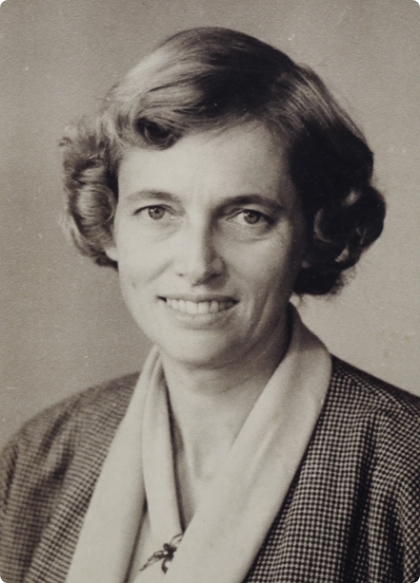
NZBTI Certificate in lieu of Diploma / 1957
32
Minka Hanskamp had already led a courageous life when she came to the NZ Bible Training Institute, now Laidlaw College, in 1957. Born in Holland, she grew up in Java, Indonesia with her four siblings where her father was headmaster of a church school. When the Japanese invaded in 1942, the family were separated and sent to internment camps for over three years. Despite hunger and sickness, Minka spent those years nursing others in the camp hospital. Amazingly, the family all survived and were reunited at War’s end.
Minka completed her nursing and midwifery training in Holland and in 1954 emigrated to NZ to join her married sister Alice. After learning English and getting her medical training certified, Minka nursed for several years.
In her application to the NZBTI in 1956, 34-year-old Minka wrote about her call to come to study: “In December 1955 I understood that the work I was doing did not satisfy me. After much praying the Lord said: ‘I want to use you’.” She later talked to some representatives of the China Inland Mission, but “My age was a problem. I left rather disappointed.” However, she remained restless until she wrote to the NZBTI for an application form, noting: “Now I have done what I could. I leave the rest entirely to Him”.
During her year of study Minka applied to the Overseas Missionary Fellowship (OMF). In his testimonial, Principal John Deane wrote: “We would recommend Minka without hesitation to represent Christ anywhere in the world.”
Minka was accepted by OMF, and in 1958 spent some months at a language school in Singapore before arriving in Pattani, South Thailand, to learn Malay. In January 1960 she joined the medical team at the newly built Saiburi Christian Hospital. There she worked as a midwife, though increasingly got involved with the leprosy work at itinerant clinics.
On 23 April 1974, Minka and Welsh nurse Margaret Morgan arrived in Pujud to conduct their fortnightly clinic when they were abducted at gunpoint by Malay separatists. A ransom note demanded 10 million baht and that OMF write official protests against Israel. Monthly letters were allowed while mission and government authorities tried to find the pair. A final letter was received from the two women in August, asking for “books and magazines as we have nothing to do all day”. Then silence.
The search finally ended on 20 March 1975 when BBC radio reported that two bodies had been found in the jungle. Forensic evidence revealed that Minka and Margaret had been shot five months earlier. Later a member of the separatist group told a friend that there had been discussion about what to do with the two women and eventually the chief decided that, to keep the respect of his underlings, they should be shot. The nurses were calm when told they were going to die, asking only “Will you let us have a little time to read and pray?” He added, “They were good people”.
The story of Minka is told in the book by Phyllis Thompson, Minka and Margaret (London: Hodder & Stoughton, OMF), 1976
To commemorate turning 100 in 2022, we researched, wrote, edited, photographed, designed and compiled a beautiful collection of 100 stories for 100 years. This very special hardcover bound book tells the stories of women and men woven into our story, some from the very beginning of when NZBTI began, right through to staff and graduates of Laidlaw College today.
By no means is this an exhaustive collection of all the stories of our past and present, and there are many more stories we wish we could have also told. Our intention in creating this book is to offer a snapshot across the breadth of our history, across many areas of influence. It gives a glimpse of the life of the College through the lens of those who travelled through it. The words on its pages point to a faithful God, present through the ages.
Copies of the book can be purchased from Laidlaw College. Please contact alumni@laidlaw.ac.nz for more details.